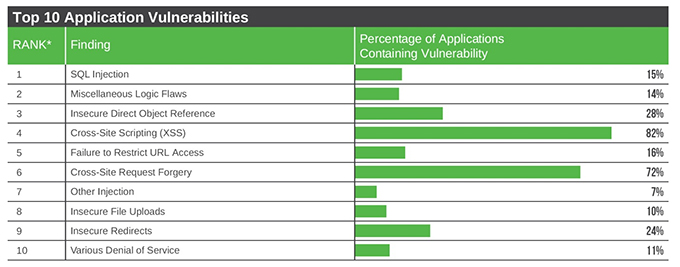
Consider: Last year, according to Verizon , 54% of data breaches began as attacks on web applications, and for years one type of attack — SQL injection — has been the means by which 83% of stolen records were extracted. Meanwhile, says Gartner , 25% of all DDOS attacks this year will be application-based, and an increasing portion of these attacks may actually be diversions in which the bad guys use remotely accessible malware to target user accounts (for personal data or, in the case of financial institutions, for money).

In my last post, I pointed out that today’s speedy, low-cost connectivity is impacting network and application management. This time I’ll concentrate on the other significant trend changing network and application management: Virtualization and cloud services.
Today’s datacenter environments are not only quickly becoming hyper-connected, most have also undergone at least some degree of virtualization and use of cloud services. The combination results in new kinds of business applications and, ultimately, a new kind of network infrastructure that exhibits…
Greater traffic volume, notably storage traffic
A shift in traffic flows from top-down/bottom-up to peer-to-peer, server-to-server, and virtual machine-to-virtual machine (now as much as 80% by some estimates)
Increasing amounts of synchronization and replication data across the network
A flatter network hierarchy

As 2013 begins, I notice plenty of commentary about mobile devices but less talk about the implications of mobility and other current events on business network and application monitoring and management requirements.
I see two key trends impacting network and application monitoring and management in the coming year: Fast, cheap connectivity and virtualization/cloud services . In this post, I’ll focus on the first of those — connectivity, which is most apparent in the current push toward (you guessed it) mobility.
Chicken or egg: Mobility ↔ connectivity
These days, your employees’ desktop functions are shifting to increasingly powerful mobile devices . At the same time, cloud services make the connectivity of those devices pretty much ubiquitous. So the value of much of your traditional infrastructure diminishes because it costs too much, is too complex, takes up too much space — and, too often, it doesn’t get the job done anymore.

In order to know whether your Cloud provider is meeting the performance and availability parameters set out in your service-level agreement (SLA), you have to be able to monitor your Cloud services.
While you might not need or care to see detailed reports about the performance of your provider’s various infrastructure elements (VMs, storage, etc.), since this information doesn’t really provide a sufficient view into overall Cloud performance , you can and should seek information from your provider regarding application and/or workload performance.

When it comes to security breaches, CEOs stand in the crosshairs. More than their IT staffs, it’s a CEO who’ll take heat for a breach that exposes customer data or endangers relationships with business partners.
So, unlike plenty of other IT issues that don’t require C-level attention, information security ranks right up there alongside financial issues as something with which CEOs need to be familiar. Yes, information security can be daunting, but so are financial statements — and CEOs have to sign off on those.
Where to start? Here are three questions every CEO should be able to answer: Do you know who your security expert is? Do you have a security policy? Do you understand how it’s implemented, managed, enforced, monitored?

Do not — I say again, do not give your Cloud service-level agreement (SLA) short shrift. Your Cloud SLA is how you make sure you get what you want and pay only for what you get.
It’s not uncommon, however, to find yourself with an assortment of Cloud SLAs — one for each service your business subscribes to. Happily, the right Cloud SLA will enable you to bundle all your Cloud services into a single monthly OpEx payment.